Chris Coward

Helping Leaders and Teams Use their Strengths to Improve Performance

Teleclass Updates List

Sign up below to be notified of the latest telclasses being offered by Chris Coward.
Name
Email

Subscribe to the Leader's Edge

Enter Your Name:
Enter your Email:

Are you Ignoring the Superficial Wounds?

Author: Chris 09.10.2008

A few weeks ago I was inflicted with a minor rope burn while tying up my dog and neglecting to get out of the way as she charged the squirrels.  I didn’t think much of it, sure it stung but there was no blood so I figured everything was OK.  I didn’t treat it with anti-biotic ointment nor did I clean it really well.


A few days later my leg started swelling and was hot to the touch.  I knew that it was getting infected and I was so angry at myself for not having prevented this by just slowing down and cleaning the affected area.  I mean, really, how long would that have taken - 3 minutes tops?


The impact was this:  oral anti-biotics for ten days, painful swelling from lower leg to foot which meant no exercise, difficulty walking and embarrassment from letting something so avoidable occur.


How does this relate to managing others?  There are many times, as leaders, we ignore or discount the superficial problems, thinking that they will just go away without intervention.  The staff person you just hired who you really want to work out but she’s called out a few times already. Are you taking her reasons at face value because you don’t want to have to revisit the hiring process, or are you addressing the situation head on?   Or, the trusted employee who casually mentions that staff are frustrated with all of the new changes.  Are you saying to yourself, “they’ll get used to it over time?”  Or, are you being proactive and taking some time in staff meeting to process their concerns?


Take an honest assessment of your leadership at work.  Are there any rope burns that sting a little but aren’t bleeding and too painful yet?  Are there situations that you could take time to address, which will prevent a bigger problem from developing? 


As always, please leave your comments on the blog.  I would love to hear from you! 


I was recently working with a manager in a social work organization who was feeling stressed about having to confront an employee who was undermining him as a leader. This staff person was openly doing her own thing, versus what she was instructed to do and it was leading to negative consequences.  One impact this employee’s behavior had on the team was that other employees were asking whether they too could deviate from the plan and in this situation that was not a good idea.


My client was upset with this person and wanted to reinforce her needing to follow the plan but in the coaching session he kept talking about the strengths of this employee - how she could engage youth in a group setting, her knowledge of youth development, and her willingness to help out in crisis situations.  It became clear that his stress was about 2 things:  1) not feeling confident in giving negative feedback to his staff person, with one of the reasons being that the employee was doing good work as well as being difficult.  2) worrying about what would happen during and after the conversation with the employee - would she quit?  Would she become toxic in the workplace?


It turns out the discussion went very well and in recognizing the employee’s strengths, together they came up with a shift in her role that played to what she does best.  My client acknowledged that getting clear on his message ahead of time instead of just being angry and letting it boil over into his relationship with this staff person was a good way to go since he could present as calm and together and be sincere in appreciating this employee’s strengths.


What are the unique strengths of your employees and are you leveraging them to benefit your organization?  If an employee is getting under your skin, do they become “the bad employee” in your eyes or are you able to see that they have both positive and negative traits?  What difficult conversations are you avoiding with staff members?


Happiness and Managing Your Stress

Author: Chris 28.07.2008

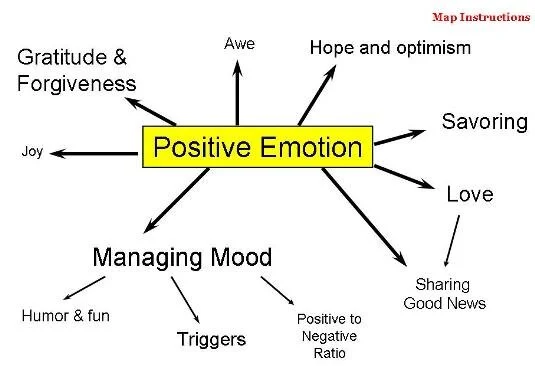
What is the connection between feeling happy and having less stress?  For one, you can’t experience both feelings at the same time.  And, positive psychology research shows that you can increase your happiness by doing certain exercises.  By that reasoning, you can decrease your stress by doing those same exercises.

A working definition of stress taken from Claire Michaels Wheeler’s book, “10 Simple Solutions to Stress” is that stress is the “situation that arises in you when life’s challenges and pressures exceed your perceived ability to cope.”  The key is that it is your perception of the event that affects your stress level.  The good news is that you can increase your coping skills and make choices to increase your happiness.

One exercise to improve your happiness is gratitude journaling.  This activity can lift your mood and move you away from a focus on what’s going wrong for you.  I have several of my coaching clients do this and they report an immediate shift in mood.  When doing this activity, reflect on what you are grateful for in your life - it could be family members, friends, a great meal, a fun party, etc.  Aim to journal 3 days a week.  I would love to know how it works for you.  If you are too shy to post here on your results please send me an e-mail to chris@chriscoward.com  Good luck!


If you live in Philadelphia, come on out to a free Stress Management Workshop on:

Tuesday, July 22, 2008 from 6-8PM.  The location is Studio 34 Yoga at 4522 Baltimore Avenue in Philadelphia.  Please RSVP to me at chris@chriscoward.com

Benefits from attending this workshop:  You’ll leave the workshop more relaxed; You will gain clarity on your priority areas to focus on; You will have fun!; You will learn techniques to manage your stress


Having worked as a leader in the field of social work for several years, I know how stressful it can be to balance the needs of staff with the needs of the upper administration as well as deal with funding cuts, staff turnover and challenging clients.  What I also know is that some stress is productive, good for us and even fun.  How you perceive the stress in your life effects how you react to it and what you do about it.


For example, this past Saturday I learned that on the following Wednesday, I would be running a group on wellness issues for a client.  Besides planning the curriculum I needed to bring in key staff at the organization to be part of the process.  As you can imagine, this produced a stress reaction for me.  What did that look like?  My bodily response was tightening in my stomach.  My first thought was, “when am I going to pull this together?”  “I have this, that and the other thing going on all before Wednesday!”


However, my next thought was, “what a great opportunity to help these folks get a taste of our wellness model.”  My stomach relaxed and I became energized as I brainstormed with my partner on how we would pull this off.  The To-Do list got created and after several phone discussions I felt ready to go and excited about doing the group. 


Let’s take a look at the shift that was made in my stress response.  My first reaction was based on fear - the fear that I was being asked to do something that was too much on short notice.  When I really looked at the task at hand I realized that I can do this.  I facilitate groups all the time and the material was not new to me. In fact, I really enjoy running groups and the topic is something I strongly connect with.


How can you reframe an initially stressful request into something that has a benefit to you, your staff, your organization or your clients?


Can you shift your priorities to make your life less stressful?  For example, can you postpone another task to free up time to accomplish the new task? 


If you are still stressed, figure out what exactly it is that’s causing your stress.  Remember, you can make a choice.  Choose to feel better.


Gallup’s Ninth Element of the Q12

Author: Chris 24.02.2008

“My associate or fellow employees are committed to doing quality work.”


The above statement is the Ninth element of employee engagement in Gallup’s Q12.  The Gallup organization interviewed thousands of employees and found that this statement is linked with employees staying on their job and putting forth a great effort for the company.  Have you ever worked with someone who just wasn’t holding their own at the job?  Have you ever managed someone who knew the job well, but chose to just do the minimum?


These types of issues are common experiences for managers and it can affect morale greatly.  Ideally as a manager you would want to supervise a team of excellent folks who work together well and challenge each other to do their best work.  What often happens is that you may have mostly excellent employees with one person who is underperforming.  This one staff person unfortunately has influence over the remaining staff who can be resentful that they are working hard and their peer is not.  They may also be upset that you, as the manager, aren’t dealing quickly enough with the problem person.


What do you do as the manager?  Deal with the problem employee directly by discussing the following:

1. Is the position best suited to the employee’s strengths?

2. If not, is there another position that would be better suited to this employee’s talents and strengths (that they are qualified for)?

3. Is there something you can do as a manager to increase the employee’s engagement at work?

4. Are you giving clear directions and expectations regarding what kind of performance you want from this employee?


There are two main options that could occur - the employee stays or the employee leaves the position.  As a manager, you only want the employee staying if they are committed to quality work.  As difficult as it is to let someone go, sometimes it is the right thing to do for the team, the organization, AND the problem employee.


Without giving away your staff person’s private information, it is important to have a firm grasp on how they are impacting the rest of the team and this assessment should contribute to your decision about keeping or losing the problem staff person.


Finally, make sure you aren’t spending more time dealing with the problem person than you are supporting your star employees.  You will get much more from nuturing your excellent employees than from trying to “fix” your mediocre employee.


I would love to hear from you about this post and your management experiences around this issue.  E-mail me at chris@chriscoward.com to submit your comments.


The Eighth Element in the Gallup Q12

Author: Chris 18.12.2007

“The mission or purpose of my company makes me feel my job is important.”

The need to feel connected to some larger purpose is a primary motivator of employees on the job.  Mission driven workgroups suffer 30-50% fewer accidents and have 15-30% lower turnover (12:  The Elements of Great Managers, Rodd Wagner and James K. Harter).

Unlike some of the other elements in Gallup’s Q12, this one is more of an emotional need, and one of a higher level.  It is normal for people to look for more after their basic needs of food, water, shelter and other physical comforts are satisfied.  At work, we look for meaning beyond just “making a living.”

How does this play out at your workplace?  Does your organization have a mission that is important and worthy?  Do workers from the top on down to the line level connect with the mission?  Is there a disconnect between the top level’s motivation around the mission and the line level’s motivation around the mission?

Coming from the field of social work it was easy to connect my work to something big and important.  With each step I made in my social work career I was still helping children and families live better lives.   It was very reinforcing to have the CEO connect with the importance of my work and the work of my department.  However, on a day to day basis, it was easy to get lost in bureaucratic details and tasks that did not easily translate to helping children and families (such as extensive, detailed paperwork).  If this situation happens to you, step back and connect to the bigger picture of your role and the work your organization does.  Find someone at your job who is inspiring in this area and get support from them.

While it would make sense that the helping professionals would have a higher score on the Eighth Element than people in less humanitarian jobs, there were plenty of people surveyed who did not feel their job was important.  And, there were plenty of people in jobs such as retail, finance and chemical manufacturing who felt that their company made them feel that their jobs were important.

The bottom line is, what can you do as a manager to make your workers feel that their jobs are important and therefore help them feel that passion when they are working with customers?  One way is to encourage upper levels of leadership to verbally state the mission and how the workers contribute to the company’s purpose.  Another way is to praise workers for specific tasks that they accomplish that further the mission.  I’m sure you can come up with more ideas and I would love to hear them. 

Please feel free to leave a comment on this post.

Happy Holidays!


Number 7 in Gallup’s Q12

Author: Chris 15.11.2007

“At work, my opinions seem to count.”

Since we know that your employees want to be heard and contribute meaningfully to the organization, how are you facilitating this as a leader?

I know several organizations that are led by “enlightened” individuals who are not afraid to admit they don’t have all the answers. Moreover, they are willing to ask workers in all levels of the company what their opinions are about their programs, employee issues, safety concerns, etc. As a leader, it can be challenging to hear the responses. You may get a feeling of “We can’t afford to make that change,” or, “I wish I hadn’t asked this since it’s clear that I can’t make everyone happy.”

Ultimately, if you are the Executive Director or President, the buck stops with you. Isn’t it better to have the input before you make the decision, knowing that you at least considered all the ideas put forth from others?

What the research tells us is that when employees are allowed and encouraged to contribute their ideas and opinions, they feel valued. Employees who feel valued are more engaged and therefore more productive and more likely to stay with the organization.

You probably can think of examples at your workplace where an employee(s) came up with an idea that was useful. As a result, the commitment level to implementing the idea was higher than normal because the worker was invested in the plan.

I challenge you as a leader to increase your receptivity to employee’s ideas and opinions and I would love to hear how it works for you. I welcome you to post on this blog or e-mail me and I can share the info anonymously.

Happy Thanksgiving!


This is the sixth statement in the Gallup Q12 of Employee Engagement. Have you ever worked somewhere and had someone above you that served as your mentor? It is a great feeling to know that someone is in your corner, offering advice and encouragement and is invested in your development.

I have been fortunate to have some wonderful mentors who took time away from their schedule to listen and ask questions that informed the next steps in my career.

How can you, as an effective leader, serve as a mentor to someone you care about? I challenge you to find someone in the organization (if you haven’t already), make an appointment with them and find out how you can be helpful to their growth. Your staff want you to show them the subtleties of the organization’s culture and share your stories of mistakes and wins. In turn you’ll get a more engaged employee.

Let me know how it goes by e-mailing me at chris@chriscoward.com


Another Element of Effective Leadership

Author: Chris 04.09.2007

“My supervisor or someone at work seems to care about me as a person.”

This statement is the 5th one of the Gallup Q12 on employee engagement. It is so easy to have work be all about “business” and be separate from employee’s personal lives. Many supervisors do not want to get into the murky waters of their staff’s family issues, their personal problems, or even their successes outside of work.

However, this separation comes at a huge cost to employee engagement. Employees will leave your company to find that caring supervisor at another organization.

Here are some things you can do to show you care about your employee:
1) Allow employees to occasionally bring their child to work - usually to celebrate a special event.
2) Check into resources for your employee’s aging parent.
3) Go with your employee to watch their child’s sporting event or school play.

There are tons of examples that could be listed. I would love to hear about anything you have done as a supervisor to show you care about your employees. Additionally, I would love to hear about any experiences you have had as an employee where you felt particularly cared for.